Citizen Science Program Faculty for 2024-25
-
 Georgia Doing '15 (she/her)(Teaching Fall 2024 and Spring 2025) Georgia is a proud Bardian ('15) who is in perpetual awe of how microbes decide to influence and react to dynamic environments and each other.
Georgia Doing '15 (she/her)
(Teaching Fall 2024 and Spring 2025) Georgia is a proud Bardian ('15) who is in perpetual awe of how microbes decide to influence and react to dynamic environments and each other.
After graduating from Bard College with a joint major in Biology and Computer Science (’15) she did her PhD work at Dartmouth College using machine learning approaches to analyze gene expression in in opportunistic pathogens. As a postdoc in the lab of Dr. Julia Oh at Duke University she is now studying the skin microbiome and the pathobiont Staphylococcus epidermidis, identifying patterns in large compendia of data and mining for functions of uncharacterized genes.
In Georgia's Citizen Science section, part of the Environmental Water Lab strand, students will pay particular attention to how quantitative data analysis and storytelling are inexorably linked during scientific knowledge generation. Understanding the concepts and assumptions behind data analysis methods can help turn shared observations turn into shared experiences. Students will explore instances from across scientific literature and personal narrative when different perspectives built, from uniform data sources, robust, adaptable and tractable understandings of our communal world.
-
 Kate Fenn '07 (she/her)(Teaching Fall 2024 and Spring 2025) Kate worked in research at the Center for Cell Biology and Cancer Research at Albany Medical College and is a 2007 graduate of the Bard Master of Arts in Teaching Program.
Kate Fenn '07 (she/her)
(Teaching Fall 2024 and Spring 2025) Kate worked in research at the Center for Cell Biology and Cancer Research at Albany Medical College and is a 2007 graduate of the Bard Master of Arts in Teaching Program.
Kate Fenn is truly honored to be joining the Citizen Science faculty in the fall. After obtaining a B.S. in Biology from Siena College, Kate worked in research at the Center for Cell Biology and Cancer Research at Albany Medical College. It was there that she discovered her love of teaching and learning, specifically in the laboratory sciences. Today, Kate is an accomplished science educator with over 18 years of experience. She has a vast array of teaching experiences to which she brings to the classroom, particularly ones centered within the Hudson Valley, such as stream ecology. She is a patient and reliable educator who values equity, diversity and inclusivity. She prioritizes student academic growth and achievement as well as social and emotional well-being. She excels at curriculum design and implementation with an innovative, creative and reflective lens. She promotes excellence in learning while ensuring every student is safe, engaged, supported and challenged. When Kate isn’t teaching, she enjoys being with her husband, three boys, and a variety of pets. Kate teaches in the Environmental Water Lab Strand. -
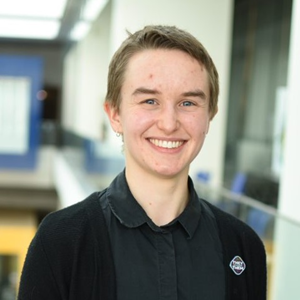 Kate Huffer (they/them)(Teaching Fall 2024 and Spring 2025) Kate Huffer is the Assistant Director of Citizen Science and is teaches in the Environmental Water Lab Strand.
Kate Huffer (they/them)
(Teaching Fall 2024 and Spring 2025) Kate Huffer is the Assistant Director of Citizen Science and is teaches in the Environmental Water Lab Strand.
Kate grew up in Green Bay, WI before majoring in Neuroscience and Biological Chemistry at Dartmouth College. They then earned their PhD in Biology from the National Institutes of Health-Johns Hopkins Graduate Partnerships Program, where they studied sensory ion channels in in the lab of Kenton Swartz, PhD, at the National Institute of Neurological Disorders and Stroke in Bethesda, MD. Kate is particularly interested in what the structure of an ion channel can tell us about how it works and which drugs it might be sensitive to. They enjoy knitting, spinning yarn, and biking. -
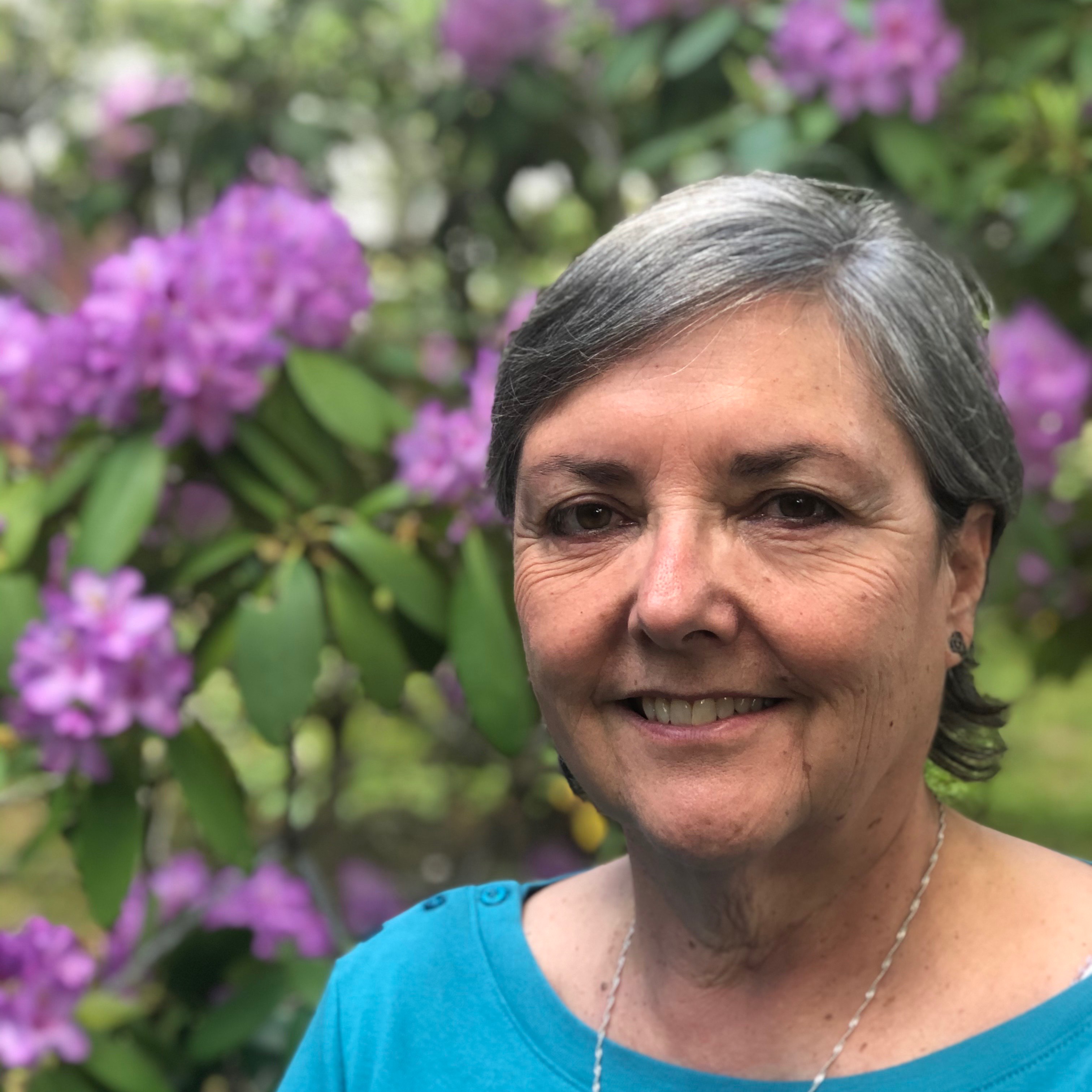 Deborah Keszenman (she/her)(Teaching Fall 2024 and Spring 2025) Deborah earned her MD from the Universidad de la Republica’s School of Medicine in Montevideo, Uruguay, and her MS and PhD in Biophysics in the area of Radiation Biology from the Universidad de la Republica–PEDECIBA. Deborah has taught eleven times in the January Citizen Science program!
Deborah Keszenman (she/her)
(Teaching Fall 2024 and Spring 2025) Deborah earned her MD from the Universidad de la Republica’s School of Medicine in Montevideo, Uruguay, and her MS and PhD in Biophysics in the area of Radiation Biology from the Universidad de la Republica–PEDECIBA. Deborah has taught eleven times in the January Citizen Science program!
Deborah Keszenman earned her MD from the Universidad de la Republica’s School of Medicine in Montevideo, Uruguay. Following her curiosity and desire of exploration of new areas, at an early stage of her medical studies she joined the Biophysics Department at the Medical School and started to do research in the area of DNA damage and repair. While working as a physician and teaching Biophysics at the Medical School, Deborah earned a MS and then a PhD in Biophysics in the area of Radiation Biology from the Universidad de la Republica–PEDECIBA. Deborah worked researching and teaching Biophysics at the Universidad de la Republica for more than 30 years, beginning as an honorary lecturer. She is a research member of the Project for Development of Basic Sciences PEDECIBA, Uruguay. In 2005, Deborah and her family moved to the United States where she continued her scientific career at the Biosciences Department at Brookhaven National Laboratory in New York and in 2006 she became a Beam Line Scientist of the NASA Space Radiation Laboratory (NSRL). In 2015, Dr. Keszenman returned to Uruguay to join the Group of Biophysical Chemistry as Professor of Biophysics at CENUR Litoral Norte in Salto, and to be in charge of the Environmental and Medical Radiation Biology Laboratory. Her scientific research is focused towards problems of radiation biology with potential application in clinical Medicine and with impact on the human-environment interaction. Deborah has specialized in the study of genomic responses to nitro-oxidative stress induced by UV, ionizing radiation, anticarcinogenic agents and pesticides at the molecular and cellular levels. Her research group is also studying the role of natural products on protective and adaptive responses to genomic damage induced by physical and chemical agents present in the environment. Her group is actively involved in the transference of all this basic knowledge to society to empower a sustainable development. Debrorah teachers in the Environmental Water Lab Strand. -
 Jonathan Lambert (he/him)(Teaching Fall 2024 and Spring 2025) Jonathan is originally from New Orleans, Louisiana and was inspired to become an earth scientist by the numerous hurricanes that struck near his hometown in the early 2000s - including Hurricane Katrina. He has degrees from Louisiana State University and Columbia University. This is his first year teaching Citizen Science.
Jonathan Lambert (he/him)
(Teaching Fall 2024 and Spring 2025) Jonathan is originally from New Orleans, Louisiana and was inspired to become an earth scientist by the numerous hurricanes that struck near his hometown in the early 2000s - including Hurricane Katrina. He has degrees from Louisiana State University and Columbia University. This is his first year teaching Citizen Science.
He studies and works within the realms of paleoclimate (past climate) and modern climate solutions (specifically geochemical carbon dioxide removal). He received his bachelor's degree from Louisiana State University in 2014 where he reconstructed hurricane landfalls over the last 500 years in a field known as "paleotempestology." Jonathan has been in New York for 10 years now though - receiving an M.A. in Climate and Society from Columbia in 2015 and eventually a Ph.D. in Earth and Environmental Science from Columbia in 2022. At Columbia, Jonathan reconstructed the last 1.5 Million years of ocean conditions in the warmest part of the global ocean - the Indo-Pacific Warm Pool - using both sediments and fossil plankton (foraminifera) and a combination of proxies for temperature, salinity, and nutrients. Jonathan has also held positions and done research in the fields of climate smart agriculture, marine conservation, and geochemical carbon dioxide removal (CDR). Currently, he splits his time between consulting for nonprofits in the emerging geochemical CDR space and teaching at liberal arts colleges around NYC. Last year, he taught "Ocean Based Climate Solutions" at Vassar College, and alongside Bard he is an Adjunct Assistant Professor at Barnard College in the Environmental Science Senior Seminar.
Jonathan teaches in the Science Communication for Public Action Strand. His section will have a particular focus on "climate and water". -
.jpeg) Jamal Davis Neal, Jr. (he/they)(Teaching Fall 2024 and Spring 2025) Jamal Davis Neal, Jr. is a recent graduate of Yale Divinity School (M.Div'24) and UConn School of Social Work (MSW'22) as part of a joint-degree program between the two schools.
Jamal Davis Neal, Jr. (he/they)(Teaching Fall 2024 and Spring 2025) Jamal Davis Neal, Jr. is a recent graduate of Yale Divinity School (M.Div'24) and UConn School of Social Work (MSW'22) as part of a joint-degree program between the two schools.
Jamal Davis Neal, Jr. (he/they)
(Teaching Fall 2024 and Spring 2025) Jamal Davis Neal, Jr. is a recent graduate of Yale Divinity School (M.Div'24) and UConn School of Social Work (MSW'22) as part of a joint-degree program between the two schools.
Jamal's last formal foray into the scientific world was during their time in undergrad at the University of Vermont, where they graduated with a B.S. in Neuroscience in 2019. While the work he does now is not necessarily related to the hard sciences, he is encouraged by Citizen Science's goal of highlighting scientific literacy skills as central to being a good citizen, in interconnected relationship with one another and with our planet. When you meet them, feel free to ask them more about their switch from the field of hard sciences to the social science disciplines--they promise they have a story to tell you. (He would also love to hear your life narrative as well!) January 2024 was their first time teaching at Bard and teaching Citizen Science and they are looking forward to continuing to teach in the program during the school year after meeting this incoming class during Language & Thinking this August.
Jamal teaches in the Science Communication for Public Action Strand. His section is concerned with both how science is communicated to the general public and how we, as "ordinary people" can take action towards meaningful change in our communities, with specific focus on the marginalized and the ways in which corporate negligence impacts them. -
 Daniel Newsome ’02 (he/him)(Teaching Spring 2025 only) Daniel has been teaching Citizen Science most years on the Annandale and BPI campuses since 2013. He holds a Ph.D. in the History of Science and a BA (from Bard) in Physics. Prior to his current academic life he was a woodworker and painter.
Daniel Newsome ’02 (he/him)
(Teaching Spring 2025 only) Daniel has been teaching Citizen Science most years on the Annandale and BPI campuses since 2013. He holds a Ph.D. in the History of Science and a BA (from Bard) in Physics. Prior to his current academic life he was a woodworker and painter.
Daniel's Ph.D. is in the History of Science specializing in medieval natural philosophy and mathematics. He currently teaches for the Mathematics Department, the Science Division, the Citizen Science and L&T programs, and the Bard Prison Initiative.
In addition to Citizen Science, he also teaches courses on medieval Islamic natural philosophy, modern and medieval mathematics, the Scientific Revolution, evolution, and most recently he has developed a laboratory course reproducing scientific experiments and technologies from the past. Daniel strives to bring his art and craft skills into whatever class he teaches. Daniel teaches in the Science Communication for Public Action Strand.
-
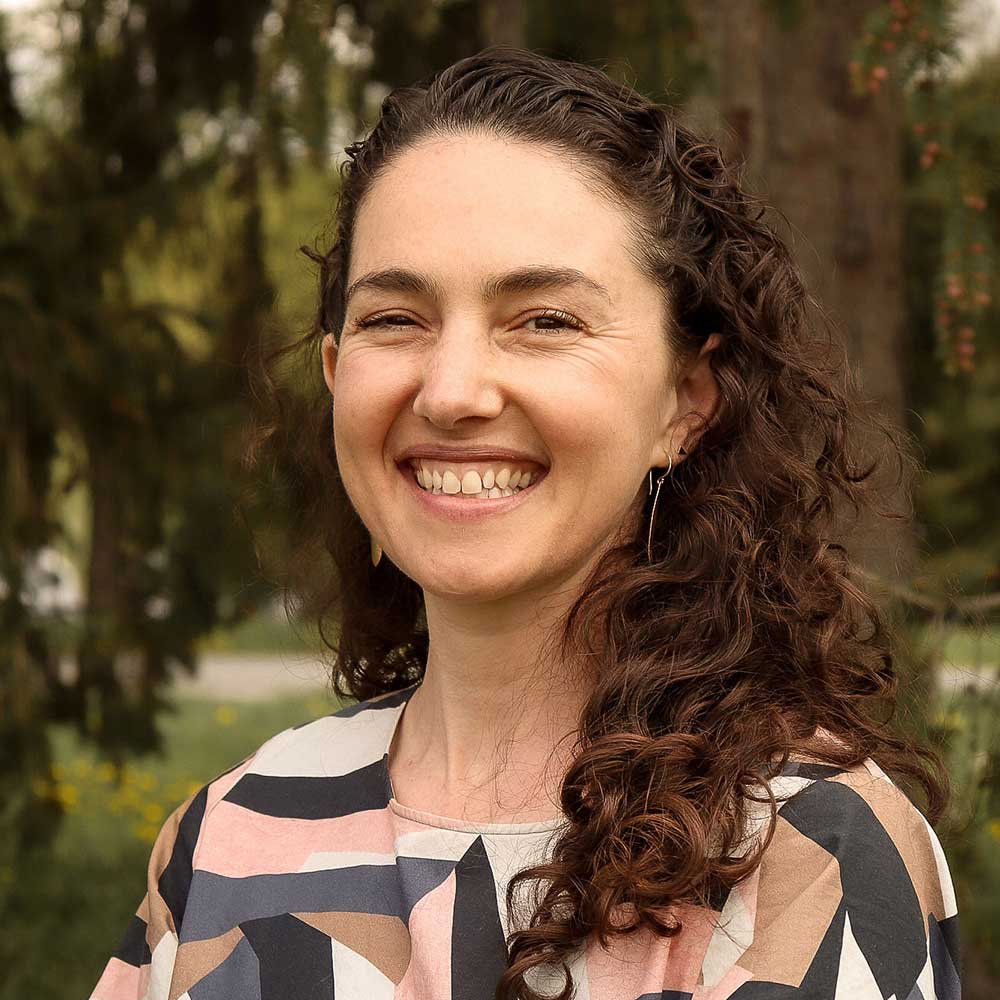 Yakira Teitel (she/her)(Teaching Fall 2024 and Spring 2025) Yakira is the Director of Health Services at Bard College and is teaching Citizen Science for the first time. She has been engaged in public health advocacy and organizing throughout her career and looks forward to exploring these themes with students in Citizen Science.
Yakira Teitel (she/her)
(Teaching Fall 2024 and Spring 2025) Yakira is the Director of Health Services at Bard College and is teaching Citizen Science for the first time. She has been engaged in public health advocacy and organizing throughout her career and looks forward to exploring these themes with students in Citizen Science.
Yakira's path to medicine and public health has been winding and untraditional. She has lived and worked in Mexico, Central America and Peru; taught in after school programs and high schools in the San Francisco Bay Area; and led community mural projects in all of these places. Yakira received her MD from the University of California San Francisco and her MPH from Columbia University in New York. She trained in Family and Community Medicine at UCSF/San Francisco General Hospital and then worked for the Department of Public Health in San Francisco doing primary care, HIV care and adolescent medicine before moving to the Hudson Valley in 2021 and starting at Bard in 2022.
Yakira teaches in the Science Communication for Public Action Strand. Yakira's section will explore the power of public health communication to enact social change towards health equity and environmental justice. Students in Yakira's section will examine specific case studies of scientists, academics, artists and community members working together to address issues facing their communities and then use these lessons to propose projects of their own. -
 Trish Tomaseski (she/her)(Teaching Fall 2024 and Spring 2025) Trish is a lifelong resident of the Hudson Valley and received her Bachelors of Science in Biology from Marist College and her Masters in Biology at the State University at New Paltz. This is her first year teaching Citizen Science.
Trish Tomaseski (she/her)
(Teaching Fall 2024 and Spring 2025) Trish is a lifelong resident of the Hudson Valley and received her Bachelors of Science in Biology from Marist College and her Masters in Biology at the State University at New Paltz. This is her first year teaching Citizen Science.
Trish will be joining the Citizen Science faculty for the first time this fall. She considers this a great opportunity and the next step in her life as a retired educator. Trish is a lifelong resident of the Hudson Valley and received her Bachelors of Science in Biology from Marist College and later her Masters in Biology at the State University at New Paltz. Trish began her career as an educator at Red Hook High School teaching regents and general Biology. She then moved on to establish her career at Millbrook High School teaching a variety of courses throughout her 32 year career. She taught middle school science, Regents Living Environment, DCC college level Biology and International Baccalaureate Biology. After retiring, Trish began substitute teaching at Rhinebeck High School and later accepted a leave replacement in Biology. This reignited her love of teaching and interacting with her students.Trish has a passion for science, especially Biology, and considers being an educator as part of who she is. She is excited to be a faculty member of the Citizen Science program and looks forward to the many rewards and challenges this new journey will present. In her free time, Trish can be seen walking on local trails, in the gym, or sitting outside trying new foods at local restaurants. She has two children and a husband that teaches culinary arts.
Trish teaches in the Science Communication for Public Action Strand. In Trish's section, students begin their lab by connecting with the water on Bard’s campus, conducting basic water quality tests to explore how scientists collect and analyze data. Students will then shift their focus to communication of such science: How does the vocabulary and tone change depending on the intended audience? How are data visualized through infographics? What is the role of storytelling in science communication, particularly through various forms of digital media? Invited speakers will join the class based upon availability. -
 Emily White (she/her)(Teaching Fall 2024 and Spring 2025) Emily is the Associate Director of the Bard College Ecology Field Station and a Research Associate with a Ph.D. in Environmental Chemistry from the State University of New York, College of Environmental Science and Forestry. This is Emily's sixth time teaching Citizen Science.
Emily White (she/her)
(Teaching Fall 2024 and Spring 2025) Emily is the Associate Director of the Bard College Ecology Field Station and a Research Associate with a Ph.D. in Environmental Chemistry from the State University of New York, College of Environmental Science and Forestry. This is Emily's sixth time teaching Citizen Science.
Emily received her B.S. in Chemistry and Environmental Studies from Tufts University, her M.S. in Environmental Science from The Ohio State University, and her Ph.D. in Environmental Chemistry from the State University of New York, College of Environmental Science and Forestry. While at SUNY-ESF, she received a NASA Earth System Science fellowship to investigate estuarine biogeochemistry and carbon cycling. Emily has participated in several oceanographic research cruises and spent a month on an Antarctic icebreaker. As a postdoctoral scientist at the U.S. Environmental Protection Agency, Emily studied recreational beach water quality. At Bard, Emily teaches introductory chemistry and lab courses that provide non-science majors with opportunities to explore Bard’s natural and human-built environment. She is the Associate Director of the Ecology Field Station and a Research Associate in the Division of Science, Mathematics, and Computing. Her interests include water quality analysis and environmental monitoring.
Emily teaches in the Environmental Water Lab Strand for Citizen Science. Her lab section explores the topic of drinking water treatment with a focus on Bard’s water system. Students will contribute to ongoing research investigating the occurrence of disinfection byproducts in drinking water through interdisciplinary field and laboratory activities. This section offers hands-on applied research experience that will benefit science majors or other students interested in working as part of a collaborative research team.





.jpeg)




Join the Conversation